Trees are the silent backbone of the Greater Toronto Area. From the towering oaks in High Park to the sprawling maples lining the streets of Mississauga, they provide more than just beauty. They clean our air, offer shade during our humid summers, and even boost property values. However, owning a tree in the GTA, especially with our dramatic seasonal shifts, comes with a real responsibility. Improperly cared-for trees aren’t just an eyesore; they can become significant safety hazards, threatening homes, power lines, and pedestrians. This guide simplifies tree care for GTA homeowners, offering actionable advice on maintaining healthy, safe trees that thrive in our unique urban environment.
Key Takeaways
Health First: Spotting stress early (discolored leaves, dying branches) saves the tree and prevents future safety issues.
Smart Pruning: Focus on removing “dead, damaged, or diseased” wood, especially before winter storms.
Local Bylaws: Before you cut, check your specific municipality (Toronto, York, Peel) for tree protection bylaws.
Winter Readiness: Protect young trees from heavy snow and salt damage; assess larger trees for structural integrity before ice storms.
Call a Pro: For large projects, disease diagnosis, or work near power lines, always hire a certified arborist like Five Star Tree Care.
Understanding the GTA Urban Forest Challenges
The trees living in our yards face challenges that their forest-dwelling cousins never encounter. Urban environments are stressful. GTA trees must contend with compacted soil (from construction and foot traffic), pollution, fluctuating water levels, and, crucially, significant temperature swings. Our harsh winters, sudden thaws, and dry, hot summers put unique stress on even native species.
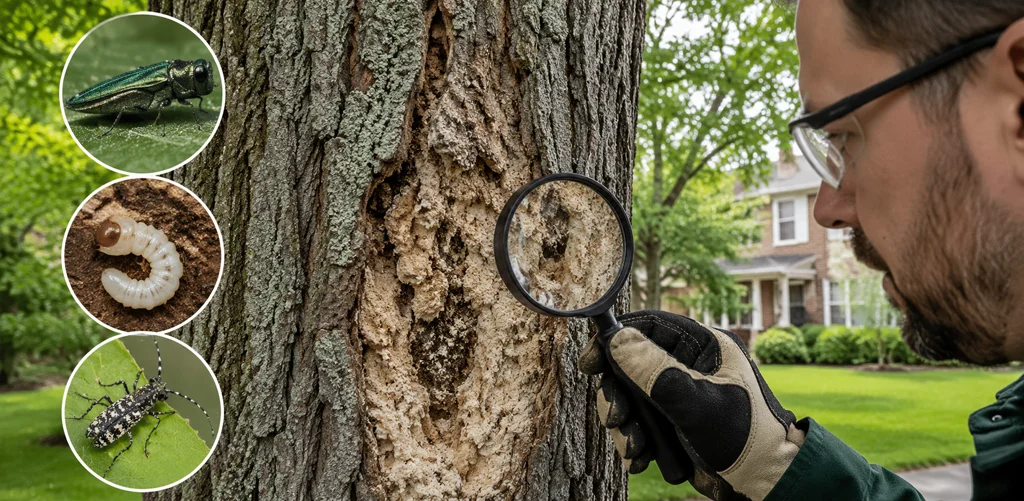
A stressed tree is a weak tree, making it more susceptible to disease and insect infestations, such as the Emerald Ash Borer or Lymantria dispar dispar (LDD, formerly known as Gypsy Moth), which have heavily impacted Ontario. By understanding these urban stressors, you can proactively manage your tree’s health, focusing on foundational care like proper mulching, regular watering during droughts, and avoiding root damage.
Season-by-Season Care: The GTA Approach
Maintaining tree health and safety requires consistent attention throughout the year.
Spring (The Recovery and Growth Phase): This is the time to assess winter damage. Look for split bark from sunscald (a major issue for young trees during sunny winter days) or branches broken by heavy snow or ice. This is the optimal time for structural pruning before new growth begins. Mulching is critical now—create a 3-inch ring around the base (but not touching the trunk, to avoid rot) to retain moisture and keep roots cool.
Summer (Stress Management): Our GTA summers are increasingly hot and dry. Focus on deep watering. It’s better to water deeply and infrequently (mimicking a natural rain pattern) than lightly and often. Shallow watering only encourages surface roots, which are less resilient during drought. Monitor for signs of common pests like Japanese beetles or signs of disease.
Fall (The Essential Preparation): As trees go dormant, focus on sanitation. Rake up and properly dispose of leaves, especially if they showed signs of fungal disease (like maple tar spot or powdery mildew). This prevents diseases from overwintering and reinfecting the tree next spring. Fall is a great time to prune many species once leaves have fallen, allowing a clearer view of the tree’s structure. Crucially, assess the structural integrity of your large trees. Are there overhanging branches that seem weak? These need to be addressed before ice storms hit.
Winter (The Danger Zone): This is the season when tree safety takes center stage in the GTA. Ice storms are a reality, and the weight of ice and heavy snow can easily snap branches. Before winter truly arrives, identify potential “high-risk” branches—those that are dead, have weak attachments (v-shaped crotches), or are encroaching on power lines or your roof. For young trees, consider protecting them from heavy snow loads and salt spray, which can scorch needles and bark.
Pruning for Safety and Aesthetics
Pruning is arguably the most misunderstood aspect of tree care. It is not just about shaping a tree; it’s about strategic cuts that enhance health and ensure safety.
What to Remove First (The 3 Ds): Start any pruning job by focusing on branches that are:
-
Dead: These are brittle, attract pests, and are high-risk fall hazards.
-
Damaged: Broken from wind or ice, or scraped from proximity.
-
Diseased: This prevents infection from spreading.
Structural Pruning: This involves making cuts on young trees to develop a strong form, preventing future problems. A professional will look to establish a “single dominant leader” (one strong central trunk) and remove “codominant stems” (two stems competing for dominance, often leading to weakness).
Common Mistakes to Avoid: The worst and most damaging pruning practice is “tree topping.” This is the severe cutting back of major limbs, leaving unsightly stubs. Topping triggers a shock response, forcing the tree to grow weak, fast-growing “suckers” or “watersprouts” that are structurally unstable and high-risk in storms. Another common error is “lion’s tailing”—over-pruning the interior of the tree and leaving foliage only at the ends, making the remaining branches heavy, unbalanced, and prone to breaking.
Navigating GTA Bylaws and Liability
One critical mistake homeowners often make is assuming they can cut down or severely prune a tree on their own property. Across the GTA, including Toronto, Mississauga, Markham, and Richmond Hill, there are strict tree protection bylaws. These bylaws vary by municipality, often applying to trees over a certain diameter (the DBH, or Diameter at Breast Height).
Cutting a protected tree without a permit can lead to massive fines. If you are unsure, always check your specific municipality’s website. If you are applying for a permit to remove a tree, you almost always need a report from a certified arborist proving the tree is dead, hazardous, or severely diseased.
Furthermore, ignoring a hazardous tree opens you to significant liability. If a tree you knew (or should have known) was unsafe falls and damages a neighbor’s property or injures someone, you could be held liable. Proper care and hiring a pro for assessments are your best defense against negligence claims.
When to Call in the Experts
While simple tasks like mulching or light pruning of small branches can be DIY projects, the reality is that major tree care requires specialized training, equipment, and insurance. The danger is not just falling out of a tree; it’s falling off a ladder—which is statistically very high-risk.
Always hire a certified arborist if:
-
You need to remove or heavily prune a large tree.
-
The work is anywhere near power lines.
-
You need a complex disease or pest diagnosed (especially related to LDD or Ash Borer).
-
A tree needs structural support (cabling and bracing).
-
You require an arborist report for a municipal permit.
A certified tree removal company, such as Five Star Tree Care, is trained in the science of arboriculture, understanding tree biology, proper pruning techniques, and—crucially—safety protocols. Investing in professional care for your high-value trees is an investment in your home’s safety and future value.
Your GTA trees are assets, and treating them as such ensures they continue to provide shade, cleaner air, and stunning urban beauty for decades to come, safely coexisting with your home and family.
* By using ontariolocalguide.ca, you acknowledge and accept the terms of our disclaimer.