Emma Faraday

Emma Faraday is a passionate writer who loves turning everyday experiences into practical insights. With her warm and thoughtful style, she explores home improvement, lifestyle, and local living topics that help readers make smarter choices. Her writing blends clarity, curiosity, and a touch of humor — making OntarioLocalGuide.ca a trusted space for useful tips and relatable stories.

Emma Faraday Photo

Ontario’s Frozen Property Assessments: Why a Tax Shake-Up Is Coming for Homeowners

Ontario Property Tax Reassessment 2016 Values

Key Takeaways Ontario property taxes are still calculated on what homes were worth on January 1, 2016. Average Ontario home prices have risen about 91% since that last assessment, according to National Post columnist Randall Denley. A reassessment doesn’t raise total municipal revenue, but it shifts who pays what. Some bills will rise and others

Ontario’s Frozen Property Assessments: Why a Tax Shake-Up Is Coming for Homeowners Read More »

Ontario’s 2 Online Credit Graduation Requirement Explained (2026–27)

Ontario Online Learning Graduation Requirement

Key Takeaways Students who started Grade 9 in 2020–21 or later need at least 2 online learning credits to earn the OSSD, unless they opt out. Only fully online courses count. Blended, flipped and live remote courses do not. Credits from any school authorized to grant OSSD credits count, including Ministry-inspected private schools. A parent,

Ontario’s 2 Online Credit Graduation Requirement Explained (2026–27) Read More »

Your Landlord Can Raise Rent by Only 1.9% in 2027: What Ontario Tenants and Landlords Need to Know

Ontario Rent Increase Guideline 2027

Key Takeaways Ontario’s rent increase guideline for 2027 is 1.9%, down from 2.1% in 2026. The guideline is the most a landlord can raise most tenants’ rent without Landlord and Tenant Board (LTB) approval. Rent can usually go up only once every 12 months, with at least 90 days’ written notice on the proper LTB

Your Landlord Can Raise Rent by Only 1.9% in 2027: What Ontario Tenants and Landlords Need to Know Read More »

Ontario’s Minimum Wage Rises to $17.95 on October 1: What Changes for Workers and Employers

Ontario Minimum Wage Increase October 2026

Key Takeaways Ontario’s general minimum wage rises from $17.60 to $17.95 an hour on October 1, 2026. The 35-cent increase is tied to Ontario’s 1.9% Consumer Price Index, as required under the Employment Standards Act. A full-time worker at 40 hours a week will earn about $728 more per year. Special rates also rise: $16.90

Ontario’s Minimum Wage Rises to $17.95 on October 1: What Changes for Workers and Employers Read More »

What Funding Is Available for Small Business Owners in Ontario Right Now

Ontario Small Business Funding Programs 2026

Key Takeaways Starter Company Plus offers up to $5,000 in non-repayable funding plus mentoring for entrepreneurs starting, expanding, or buying a business. Summer Company gives young entrepreneurs (15–29) up to $3,000 to launch a summer business. Small Business Enterprise Centres (SBECs) across Ontario provide free advisory support, and are the delivery point for most provincial

What Funding Is Available for Small Business Owners in Ontario Right Now Read More »

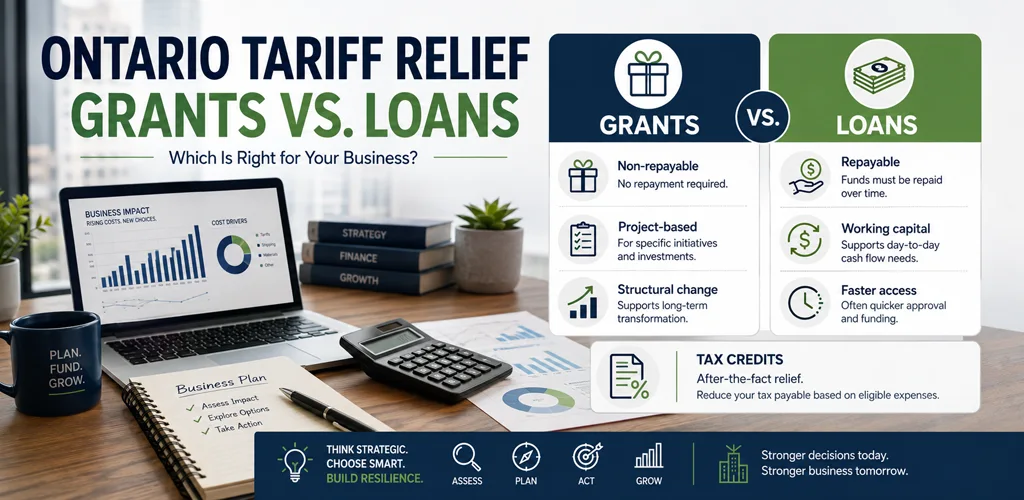
Ontario Tariff Relief: Grants vs. Loans — Which Is Right for Your Business?

Ontario Tariff Relief Grants Vs Loans

Key Takeaways Loans (repayable) suit businesses with a clear ability to repay who need capital now — for cash flow, equipment, or expansion. Grants and non-repayable contributions suit businesses making structural changes, like market diversification or reshoring, where the province wants to share the risk. Some programs, like the Ontario Together Trade Fund, blend both

Ontario Tariff Relief: Grants vs. Loans — Which Is Right for Your Business? Read More »

Keeping Employees During a Trade Slowdown: Ontario’s Work-Sharing and Retention Programs

Ontario Work Sharing Worker Retention Grant Guide

Key Takeaways The EI Work-Sharing Program lets employers reduce hours instead of laying off staff, with employees receiving EI benefits to offset the wage gap. Special tariff measures extend agreements to a maximum of 76 weeks (up from 38) and are now in effect until March 31, 2027. The new Worker Retention Grant tops up

Keeping Employees During a Trade Slowdown: Ontario’s Work-Sharing and Retention Programs Read More »

BDC Pivot to Grow Program: Working Capital Loans for Tariff-Affected Ontario Businesses

Bdc Pivot To Grow Program Working Capital Loans For Tariff Affected Ontario Businesses

Key Takeaways The Pivot to Grow Program offers up to $5 million in financing from the Business Development Bank of Canada (BDC) to help businesses manage U.S. tariff impacts. It’s split into two streams: Liquidity Support (cash flow) and Pivot Support (longer-term adaptation), each with different requirements. Baseline eligibility includes $1 million+ in annual revenue,

BDC Pivot to Grow Program: Working Capital Loans for Tariff-Affected Ontario Businesses Read More »

Scroll to Top