
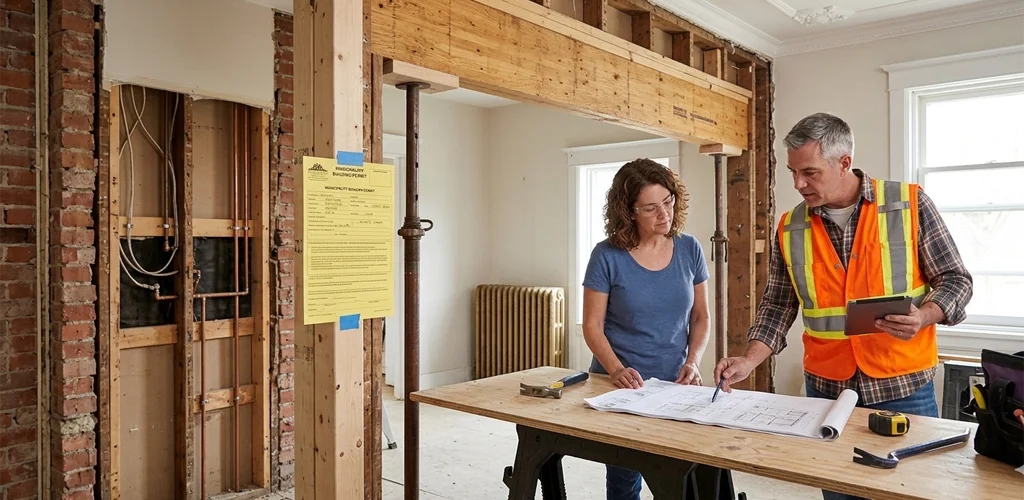
Starting a home renovation in Ontario can be exciting, but it’s also a major undertaking. Whether you’re dreaming of a modern kitchen, a spa-like bathroom, or an extensive home addition, being prepared is the key to a successful project. Ontario has its own set of rules, regulations, and challenges that can catch homeowners off guard. Navigating the process smoothly requires more than just picking paint colors; it involves strategic planning, a clear understanding of legal requirements, and smart budgeting. This guide is here to walk you through the essential things every Ontario homeowner should know before swinging that sledgehammer.
Key Takeaways
Get It in Writing: A detailed, written contract is non-negotiable in Ontario to protect your investment.
Permits Protect You: Building permits are not optional and are critical for your home’s safety and legal compliance.
Master Your Budget: Factor in a 15-20% contingency fund for the unexpected discoveries that inevitably arise.
Choose Local Pros: Hire reputable Ontario contractors who understand the local building codes and environment.
Think Beyond Aesthetics: Prioritize structural, electrical, and plumbing updates before focusing on the pretty finishes.
The Foundation: Your Written Contract
In Ontario, a renovation is only as strong as its foundation, and that foundation is your contract. Never, ever rely on verbal agreements, even if you trust the contractor completely. The Consumer Protection Act, 2002 (CPA) in Ontario provides strong rights to consumers, but they are difficult to enforce without a clear, comprehensive contract. A handshake deal leaves too much room for misunderstanding and leaves you vulnerable if things go wrong.
A strong, written contract must include several vital components:
-
Clear Scope of Work: A detailed description of exactly what will be built, repaired, or installed. Don’t leave anything to interpretation.
-
Total Project Cost & Payment Schedule: The total price, including HST, and a clear timeline of when payments are due. Link payments to milestones (e.g., “upon completion of plumbing rough-in”) rather than set dates.
-
Start and Completion Dates: A realistic timeline for when the work will begin and, importantly, when it is expected to be finished.
-
Warranty Details: Specifics of what is covered, for how long, and how to make a claim.
-
Materials List: Brands, models, colors, and quantities of the materials to be used. “Contractor grade” is not a specification.
-
Change Order Process: A defined procedure for handling any changes to the project after work begins, including how costs and timelines will be adjusted.
-
Subcontractor and Insurance Information: Proof that your general contractor has Commercial General Liability (CGL) insurance and Workplace Safety and Insurance Board (WSIB) coverage for their workers and subcontractors. This protects you from liability if someone is injured on your property.
-
Contractor’s Full Business Information: Name, address, phone number, and Ontario Business Number (OBN) or CRA Business Number.
Think of your contract as a roadmap. It prevents you from getting lost in a maze of disputes and ensures everyone is on the same page. Without it, you are driving blind.
Demystifying Building Permits and Bylaws
One of the most frequent mistakes Ontario homeowners make is assuming a building permit is just red tape. This could not be further from the truth. In Ontario, building permits, governed by the Ontario Building Code (OBC) and municipal zoning bylaws, are essential for safety, structural integrity, and legal compliance. Ignoring them can lead to devastating consequences: fines, work being ordered removed, or difficulty selling your home in the future.
When Do You Need an Ontario Building Permit? Generally, you need a permit for any work that:
-
Alters the structural integrity of the house: Cutting into load-bearing walls, replacing roof structures, digging a foundation.
-
Installs or modifies major systems: Plumbing, electrical, and HVAC. Even seemingly minor plumbing work, like moving a toilet, requires a permit in most Ontario municipalities.
-
Changes the footprint of the home: Adding an extension, garage, or second story.
-
Creates a secondary suite: Converting a basement into an apartment.
While minor renovations like painting, tiling, or replacing existing windows/doors (of the same size) may not require a building permit, major overhauls absolutely do. Electrical work requires its own inspection and permit through the Electrical Safety Authority (ESA) of Ontario, separate from your municipal building permit. Always assume you need a permit and confirm with your municipal building department first. Don’t rely on your contractor’s verbal assurances—as the homeowner, you are ultimately responsible.
Budgeting for Reality, Not Just the Estimate
Let’s talk money. Budgeting for a renovation in Ontario is about planning for the actual cost, which is almost always higher than the initial estimate. In the excitement of planning, it’s easy to focus only on the cost of the “fun stuff” (like that stunning backsplash), neglecting the complex hidden systems and necessary structural work that consume a large portion of your funds.
Here’s how to build a realistic Ontario renovation budget:
-
Identify All Hidden Costs: These include permit fees (which can be substantial), inspection costs, HST (which must be clearly marked on your quote and contract), temporary accommodation (if your kitchen or bathrooms are out of commission), storage fees, and design consultation costs.
-
Factor in the “What-If” Fund (The Contingency): In Ontario, with its variable weather and older housing stock, it is crucial to budget a 15-20% contingency fund. This money is only for unforeseen issues that are discovered after work begins: knob-and-tube wiring hidden in a wall, structural rot from an old leak, asbestos that requires specialized abatement, or a cracked foundation. Do not budget for a $50,000 renovation if you only have $50,000 in your bank account; you are setting yourself up for financial stress.
A professional contractor will provide a transparent, detailed quote (which should become part of your contract). When reviewing quotes, ensure they are itemized, allowing you to see exactly where your money is going. Avoid “estimated” costs whenever possible and insist on fixed prices for as much as you can.
Choosing the Right Ontario Contractor: Your Partner in This Journey
The most critical decision you will make is choosing your contractor. A good contractor is your expert guide and problem-solver; a bad one is a source of endless frustration. Ontario’s renovation market is highly unregulated, meaning anyone with a pickup truck and a toolbox can call themselves a contractor. Due diligence is not just recommended; it’s essential to avoid “reno horror stories.“
Here’s how to find and vet a reputable Ontario contractor:
-
Go Beyond Online Reviews: While helpful, don’t base your decision solely on Google or HomeStars ratings. Ask for recent references (projects completed in the last 12-18 months) and actually call them. Ask about communication, cleanliness of the job site, timeliness, and how they handled unexpected problems. If a contractor is hesitant to provide references, consider it a major red flag.
-
Ask for Physical Proof: Insist on seeing physical, current copies of their Commercial General Liability (CGL) insurance certificate (confirming coverage of at least $2-5 million) and their WSIB clearance certificate. Don’t just take their word for it.
-
Look for Local Expertise: Hire a contractor who works extensively in your specific region of Ontario. They will be more familiar with local municipal building departments, bylaws, and common issues specific to local housing types.
-
Trust Your Gut: Beyond credentials, you need to feel comfortable communicating with your contractor. Renovation is a long process; clear communication and a positive working relationship are invaluable.
A reputable contractor, like those at Violet Build Toronto, understands these requirements and works transparently to ensure your project meets all standards. They will navigate the permit process with you (and often apply for it on your behalf), provide clear, written contracts, and prioritize safety and quality. Don’t be afraid to walk away from a contractor who tries to cut corners or rush you into a decision.
Communication is Your Superpower
The key to navigating the renovation journey with minimal stress is open and honest communication. Misunderstandings are the leading cause of conflict during any major home project.
-
Schedule Regular Check-ins: Establish a consistent schedule for updates (e.g., a brief weekly meeting or a daily progress email). This is your time to ask questions, review progress, and discuss upcoming phases.
-
Document Everything: Use email or a project management app for all communications. This provides a clear, documented history of decisions, change orders, and agreements, which can be invaluable in case of any future disputes.
Prioritize What Matters: Structure and Systems Over Styles
When planning your dream space, it’s all too tempting to prioritize the visible finishes. However, a stunning new bathroom is useless if the plumbing is leaking behind the wall, and that gourmet kitchen won’t matter if your electrical panel can’t handle the load.
In Ontario, with our old housing stock and challenging climate, the smartest approach is to prioritize structure and systems. If you have a limited budget, invest first in a new roof, upgraded windows, a reliable furnace or AC, or a full electrical and plumbing modernization. These foundational improvements not only ensure safety and prevent future issues but also increase your home’s value far more sustainably than decorative upgrades. Fulfill the necessary work before the desirable work.
Starting a renovation in Ontario with your eyes wide open is the single best way to ensure success. By securing a strong written contract, understanding and complying with legal permit requirements, budgeting realistically, choosing the right local professional, and prioritizing structural integrity, you can navigate the complex renovation landscape smoothly and transform your house into the home you’ve always wanted.
* By using ontariolocalguide.ca, you acknowledge and accept the terms of our disclaimer.