
Key Takeaways
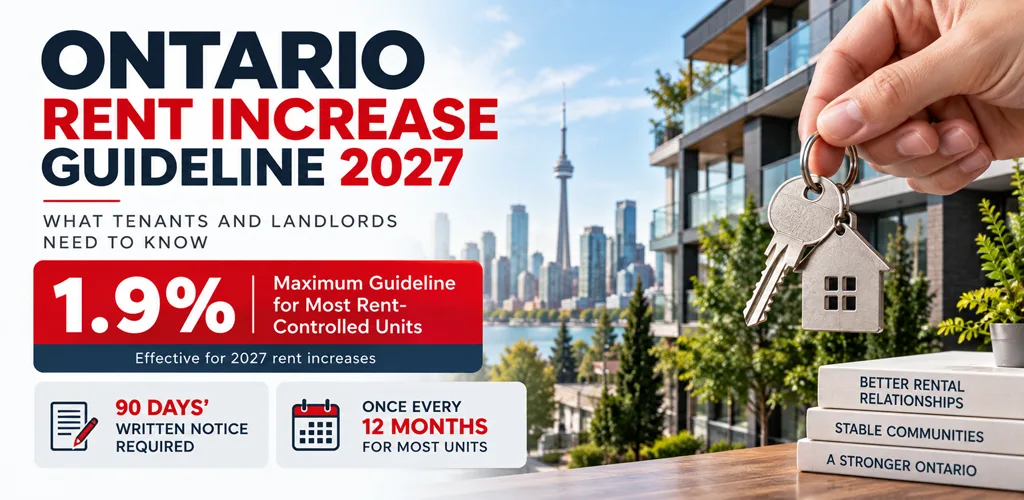
- Ontario’s rent increase guideline for 2027 is 1.9%, down from 2.1% in 2026.
- The guideline is the most a landlord can raise most tenants’ rent without Landlord and Tenant Board (LTB) approval.
- Rent can usually go up only once every 12 months, with at least 90 days’ written notice on the proper LTB form.
- For a January 1, 2027 increase, notice must be served by October 3, 2026.
- Units first occupied after November 15, 2018 are generally exempt from rent control.
- Tenants can dispute an improper increase at the LTB within 12 months of first being charged.
Ontario has set the rent increase guideline for 2027. The 2027 guideline is 1.9%, and it is the maximum a landlord can raise most tenants’ rent in a year without LTB approval. That’s a small drop from 2026. For renters already paying record rents, it offers a little predictability.
The timing matters now. Many tenancies renew on January 1, and the notice for a January 1, 2027 increase must be served by October 3, 2026 at the latest. Tenants and landlords who know the rules can avoid disputes later.
What 1.9% Means in Real Dollars
The guideline applies as a percentage of current rent. Some examples:
- $1,000 per month: $19.00 increase, for new rent of $1,019.00
- $2,000 per month: $38 more per month, or $456 over a full year
- $2,500 per month: $47.50 increase, for new rent of $2,547.50
How the Guideline Is Calculated
The number isn’t set by politicians. It is based on the Ontario Consumer Price Index, using data from June to May to set the next year’s guideline. The guideline is also capped at 2.5% to protect tenants from large one-time increases.
That cap was the guideline for three straight years. It was 2.5% in 2023, 2024 and 2025, then 2.1% in 2026, and now 1.9% for 2027.
The Rules Every Rent Increase Must Follow
A rent increase within the guideline can still be invalid if the process isn’t followed. Under Ontario’s rules:
- At least 12 months must have passed since the last rent increase or the start of the tenancy.
- The landlord must give written notice at least 90 days before the increase takes effect.
- The notice must be on the proper LTB form. For most units, that is the N1 form.
Verbal notice, a text message or a note on the door doesn’t meet the standard. If any of these steps is missed, the increase doesn’t take effect, and a tenant who overpaid can recover the difference.
Which Units Are Exempt
The guideline doesn’t apply to:
- New buildings, additions and most new basement apartments first occupied for residential purposes after November 15, 2018
- A unit on turnover, where the landlord and new tenant agree on the rent
- Community housing units, long-term care homes and commercial properties
If there is a dispute, the landlord has to prove the exemption. Landlords can add a term under section 15 of the standard lease stating the unit is exempt, and should keep supporting records such as building permits or occupancy permits.
When Rent Can Go Above 1.9%
In some cases, landlords can apply to the LTB for approval to raise rent above the guideline. Grounds can include major repairs, capital expenditures or increases in municipal taxes, but the application has to go through the full LTB process.
Tenants who receive these documents should note the hearing date and the reasons given. They can also submit their own evidence. Rising property taxes are a common reason for these applications. Our look at why Ontario property taxes are climbing in 2026 explains the pressures many landlords are facing.
What Tenants Should Do Now
If you receive a rent increase notice this fall, run through a quick check:
- Confirm the increase is 1.9% or less, unless your unit is exempt.
- Count back 90 days from the effective date to confirm the notice came in time.
- Check that at least 12 months have passed since your last increase.
- Keep a copy of the notice and your payment records.
If something looks wrong, you can dispute it at the LTB within 12 months of the amount first being charged. You can also contact the LTB to find out whether your unit is exempt from the guideline.
Rent Is Only Part of the Budget
A 1.9% increase is manageable on its own, but renters often pay utilities on top. Our guide to why Ontario hydro bills jumped in 2026 explains the rate plan changes that can cut monthly costs, which is useful whether you rent or own.
* By using ontariolocalguide.ca, you acknowledge and accept the terms of our disclaimer.