Key Takeaways
- The Protect Ontario Financing Program (POFP) offers term loans from $250,000 up to $40 million to help cover payroll, lease, and utility costs.
- Eligibility now covers both Section 232 tariffs (steel, aluminum, copper, autos) and the newer Section 338 tariffs (a broader list including machinery, plastics, beverages, paper, furniture, and more).
- Businesses need at least $2 million in annual revenue, 10 full-time Ontario employees, and 3 years of financial history to qualify.
- Applicants must show they’ve already tried — and exhausted or hit real barriers with — federal funding options before applying.
- The process starts with a short online screening questionnaire, not a full application.
What the Protect Ontario Financing Program Covers
POFP is a $1 billion provincial loan program designed to help tariff-affected businesses meet short-term financial obligations rather than fund growth or expansion. It’s meant for working capital — the everyday costs of keeping a business running.
Eligible uses include:
- Payroll
- Lease payments
- Utility payments
It’s worth noting this program covers operating costs only. It does not fund equipment purchases, acquisitions, refinancing, or business relocation — even a move within Ontario.
Who Qualifies
As of the program’s most recent update on August 24, 2026, eligibility now spans two tariff categories. To qualify, a business must meet all of the following:
- Be a for-profit business (legal entity or limited partnership) registered and operating in Ontario
- Operate — as a direct exporter or supply-chain supporter — in a sector affected by Section 232 tariffs (steel, aluminum, copper, autos) or Section 338 tariffs, which now covers a much wider list:
- Mechanical and electrical equipment
- Plastics and packaging
- Beverages (beer, wine, cider, spirits)
- Paper products
- Furniture
- Other goods such as jewelry, textiles, dairy, and leather/footwear
- Have at least $2 million in annual revenue
- Employ at least 10 full-time staff in Ontario
- Have a minimum of 3 years of operating history with financial statements
- Demonstrate material working capital strain caused by the tariffs
- Have already explored — and exhausted or hit significant barriers with — federal funding support
This last point trips up a lot of applicants. The province expects businesses to have looked into federal programs first, not skipped straight to POFP.
Who Won’t Qualify
A few categories are explicitly excluded, regardless of tariff impact:
- Not-for-profits, associations, and charities
- Start-ups without a sales or operating track record
- Requests for non-working-capital costs (like new equipment or property)
- Refinancing of existing business debt
- Acquisitions, buyouts, or relocations
If your business fits any of these, POFP isn’t the right tool — though other programs covered in our complete guide to Ontario tariff relief may still apply.
Loan Terms
If approved, funding comes as a term loan with the following general structure:
- Minimum loan size: $250,000 (up to $40 million per business)
- Repayable over up to 72 months (6 years)
- No prepayment penalty
- Annual repayment frequency
- Interest may apply up to market prime rate, at the province’s discretion
- Some loans may be principal-free for the first 12 months
Businesses must also demonstrate the ability to repay and provide security satisfactory to the province — this isn’t a grant, and due diligence is thorough.
Can You Combine POFP With Other Funding?
Stacking rules are fairly specific:
- POFP funding can be combined with other provincial programs, but only for existing, previously approved projects — not new ones.
- POFP funding can be combined with federal funding programs.
This gives businesses some flexibility, but it’s worth mapping out funding sources carefully before applying, since layering in the wrong order can affect what you’re still eligible for.
How to Apply, Step by Step
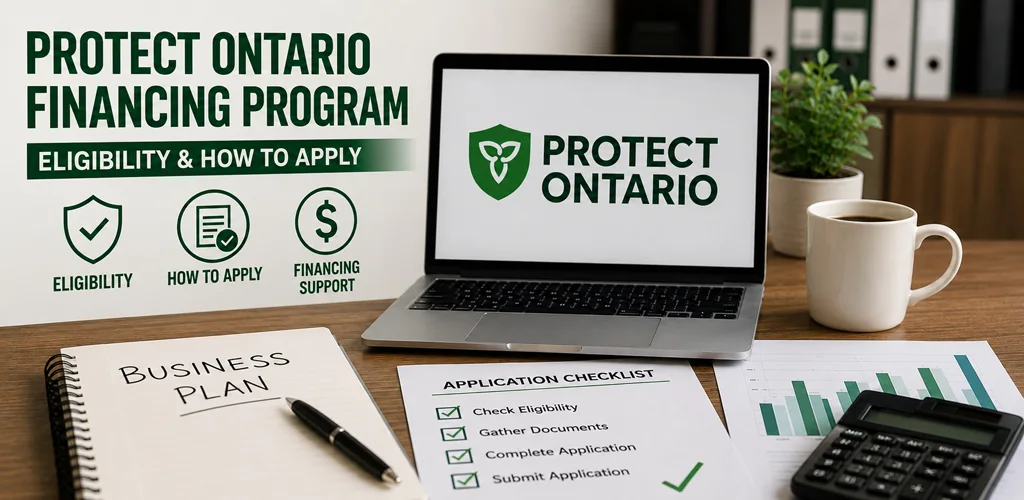
- Complete the short screening questionnaire on the Ontario government’s POFP page to check preliminary eligibility.
- Wait to be contacted — if you pass initial screening, the province will reach out to discuss next steps and required documentation.
- Prepare supporting materials, including financial statements, proof of tariff-related impact, and evidence of federal funding attempts.
- Go through third-party due diligence, since applications are reviewed by an independent financial agent before funds are disbursed.
Because this program has already changed its eligibility rules once this year — and could again — confirming current terms directly with the Ontario government before applying is the safest approach. Businesses managing rising costs on multiple fronts, from tariffs to climbing property taxes and hydro bills, may find this kind of liquidity support especially useful for staying stable through 2026.
* By using ontariolocalguide.ca, you acknowledge and accept the terms of our disclaimer.