Key Takeaways
- Toronto’s Basement Flooding Protection Subsidy Program was nearly doubled effective May 1, 2026, raising the maximum subsidy per property from approximately $3,400 to a new ceiling of $6,650.
- The expanded program includes a 28% increase to backwater valve and sump pump subsidies, plus a new Home Plumbing Assessment subsidy to identify internal plumbing issues that contribute to basement flooding.
- Eligible homeowners who completed work on or after November 12, 2025 can apply retroactively under the enhanced subsidy amounts — making this one of the few municipal programs in Ontario that rewards homeowners who already invested in flood protection.
- Water damage now accounts for roughly 48% of all home insurance claims in Ontario, and the average claim for a flooded basement exceeds $43,000 in cleanup, restoration, and replacement costs.
- Etobicoke, parts of central Toronto, and older parts of Mississauga sit on heavy clay soil with aging combined sewer infrastructure — making them among the highest-risk basement flooding zones in the province.
- A finished basement with vinyl plank flooring, drywall, or electronics adds significantly to potential flood losses; the financial case for prevention now consistently outweighs the cost of inaction.
- The subsidy applies only to work performed by licensed plumbers and contractors, and the paperwork must be filed correctly to qualify — turning the choice of contractor into a meaningful financial decision.
Basement flooding has shifted in Toronto and across the GTA from a rare misfortune to a statistical probability for a meaningful share of homeowners. Severe rainfall events in 2024 alone caused water damage in more than 1,000 Toronto homes, and the combination of aging combined sewer systems, heavy clay soils, and increasingly intense storms means the long-term trend is moving the wrong direction. The good news, as of May 1, 2026, is that the financial support available to actually prevent that damage just nearly doubled.
If you own a home in Toronto — or you are planning improvements that touch your plumbing, sump system, or foundation drainage — this is one of the highest-return programs available to you right now.
What the Expanded Subsidy Actually Covers
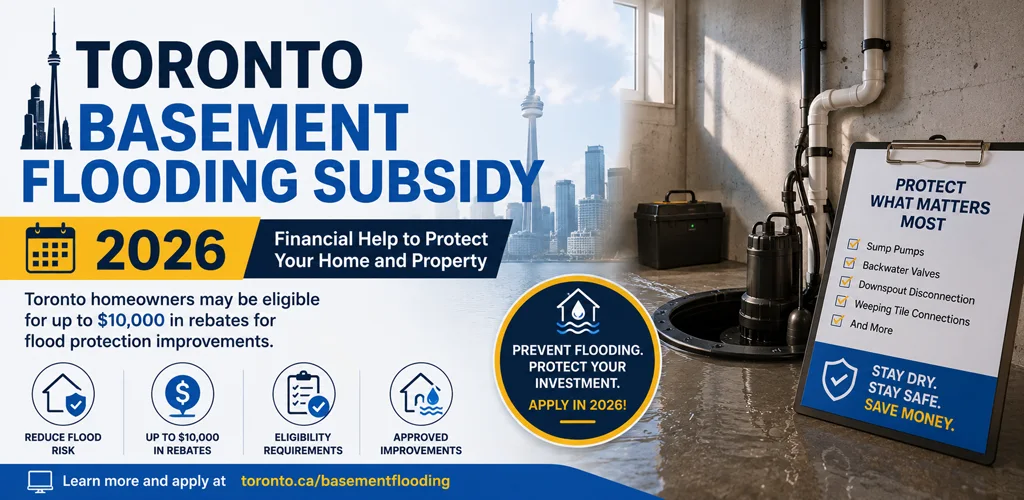
The City of Toronto’s Basement Flooding Protection Subsidy Program has existed since 2007, but the May 1, 2026 expansion represents the most significant increase since the program launched. The maximum subsidy per residential property climbed from approximately $3,400 to a new ceiling of $6,650, and the eligibility scope expanded along with the dollar figures.
The expanded program now includes:
- A 28% increase to backwater valve subsidies, reflecting current installation costs.
- A 28% increase to sump pump subsidies, similarly adjusted for market pricing.
- A new Home Plumbing Assessment subsidy that helps homeowners identify internal plumbing issues — like cracked pipes, improper drain connections, or aging weeping tile setups — that contribute to flood risk before the next storm arrives.
- Retroactive eligibility for qualifying work completed on or after November 12, 2025, which means homeowners who already invested in flood protection late last year may be able to claim the enhanced amounts.
The work has to be performed by a licensed plumber or contractor, and the application has to be filed with documentation that demonstrates the installation meets the program’s standards. Information about eligibility and application details is available through the City of Toronto’s program page at toronto.ca/BFPsubsidy.
Why Basement Flooding Has Become Such an Expensive Problem
Three factors have combined to make basement flooding one of the dominant risks for Toronto-area homeowners. Understanding them clarifies why prevention is now significantly cheaper than reaction.
The first is climate. Heavier rainfall events, more pronounced freeze-thaw cycles, and longer wet seasons have all combined to push more water into urban drainage systems than they were designed to handle. The summer storms of 2024 produced record-breaking insured losses across Canada, and 2026 has already seen erratic precipitation patterns that have stressed infrastructure across the GTA.
The second is infrastructure. Toronto’s combined sewer system — which carries both stormwater and sanitary waste through the same pipes in older parts of the city — was designed for a population roughly half the current size. During a heavy downpour, those pipes can reach capacity within twenty minutes, and the path of least resistance for the overflow is back up through household plumbing into basements. This is exactly the type of event a backwater valve prevents.
The third is soil. Etobicoke, parts of central Toronto, and large portions of Mississauga sit on heavy clay soil that does not absorb water the way sandier soils do. When water cannot drain through the ground, it builds against foundation walls, generating hydrostatic pressure that pushes through any weak point in your foundation, weeping tile, or sump system. Homes built in the mid-1900s in these areas often still have weeping tiles connected directly to the sanitary sewer — a configuration that practically guarantees a backup during heavy rain.
The combined result is that water damage now accounts for approximately 48% of all home insurance claims in Ontario, and the average flooded basement claim now exceeds $43,000 when cleanup, restoration, and contents replacement are all included. For homeowners with finished basements containing vinyl plank flooring, drywall, electronics, or living space, those numbers climb even higher.
How to Actually Claim the Subsidy
The expanded subsidy is meaningful money, but claiming it correctly requires a few steps that homeowners often skip.
- Confirm your property is within the program’s eligibility area. The City’s online portal lets you check whether your address qualifies before you commit to any work.
- Get quotes from licensed contractors who have experience with the subsidy program. Not every plumber is familiar with the documentation requirements, and a contractor who has done this work before will be significantly easier to work with on the paperwork side.
- Document everything from the start. Photos before, during, and after installation, copies of all invoices, and confirmation that the work meets Ontario Building Code requirements all matter for the application.
- Submit your application within the program’s timeframe. Retroactive eligibility back to November 12, 2025 is a real benefit, but only if the application is filed correctly.
- Notify your insurance provider once the work is complete. Many insurers offer premium discounts for homes with backwater valves and sump pumps — and the discount stacks with the subsidy savings, producing ongoing returns on the investment.
The contractor choice in particular matters more than most homeowners realize. The plumber installing your backwater valve is also responsible for ensuring the installation passes inspection and that the paperwork supports your subsidy claim. The general guidance in how to choose a reliable contractor in Ontario applies directly here — licensed, insured, experienced, with verifiable references and a clear understanding of municipal requirements.
How This Connects to Your Home Insurance Bill
The link between basement flood protection and home insurance is direct and immediate. Water damage is the single largest driver of rising premiums across Ontario, and insurers are increasingly pricing risk based on whether individual homes have protective infrastructure in place. A backwater valve and a working sump pump signal to insurers that your property is meaningfully lower-risk than its neighbours without those features.
That dynamic is one of the central themes in why Ontario home insurance keeps rising — and the practical answer for homeowners is to invest in the prevention upgrades that demonstrate lower risk. With the City of Toronto now covering up to $6,650 of that cost, the math of the decision has shifted significantly in favour of acting now rather than waiting.
This is also a moment to think about how flood protection interacts with other water-related home risks. Eavestrough function, downspout direction, and even tree placement around the property all affect how water moves around your foundation. The simple guide to tree care and safety in the GTA covers one piece of that picture — large trees with extensive root systems can disrupt drainage and damage underground pipes in ways that contribute directly to basement flooding risk.
The Bottom Line for Toronto Homeowners in 2026
The expanded basement flooding subsidy is one of the rare cases where a municipal program meaningfully changes the financial calculation for homeowners. The work is genuinely worth doing — water damage is the most common claim type in Ontario and the most expensive in absolute dollar terms for many households. The added subsidy money simply makes the case stronger.
Homeowners who act in 2026 lock in protection at a discount, position themselves for lower insurance premiums going forward, and avoid the cascade of complications that follow a flooded basement claim. Homeowners who wait are betting that their property’s geography, soil, and infrastructure are different from their neighbours’ — a bet that the data increasingly suggests is the wrong one to make.
Learn more: https://www.toronto.ca/basementflooding/
For more practical guides to navigating home ownership and local programs in Ontario, the Ontario Local Guide blog covers the topics that matter most to households across the province.
* By using ontariolocalguide.ca, you acknowledge and accept the terms of our disclaimer.