Ontario’s urban canopy and rural forests are under constant pressure from invasive insects and native pests that can quietly destroy mature trees in just a few seasons. From the relentless emerald ash borer to the leaf-stripping spongy moth, knowing which threats are active in your region — and how to spot them early — is the difference between saving a backyard tree and paying for an emergency removal.
This guide breaks down the most common tree pests in Ontario, the warning signs to look for, and the practical steps you can take to protect the trees on your property.
Key Takeaways
- Emerald ash borer, spongy moth, and Asian long-horned beetle are among the most destructive tree pests currently active in Ontario.
- Early detection is critical — many infestations show subtle signs in the canopy before bark damage becomes visible.
- Moving firewood between regions is one of the fastest ways pests spread, and it’s regulated by the Canadian Food Inspection Agency.
- Regular inspections, proper pruning, and targeted treatments like TreeAzin can extend the life of vulnerable trees.
- Working with a certified arborist is the safest path when an infestation is suspected.
Why Ontario Trees Are Under Pressure
Ontario sits at the intersection of major trade routes, busy ports, and a warming climate — three factors that have made it a hotspot for invasive forest pests over the past two decades. Many of these insects arrived hidden in wooden shipping pallets or untreated lumber and now have no natural predators to keep their populations in check.
Native trees evolved alongside native insects, but the new arrivals exploit defences that ash, oak, and maple species simply don’t have. The result is widespread canopy loss in cities and conservation areas across the province.
The Most Damaging Insect Pests Right Now
A handful of insects do most of the damage to Ontario trees, and homeowners should learn to recognize each one:
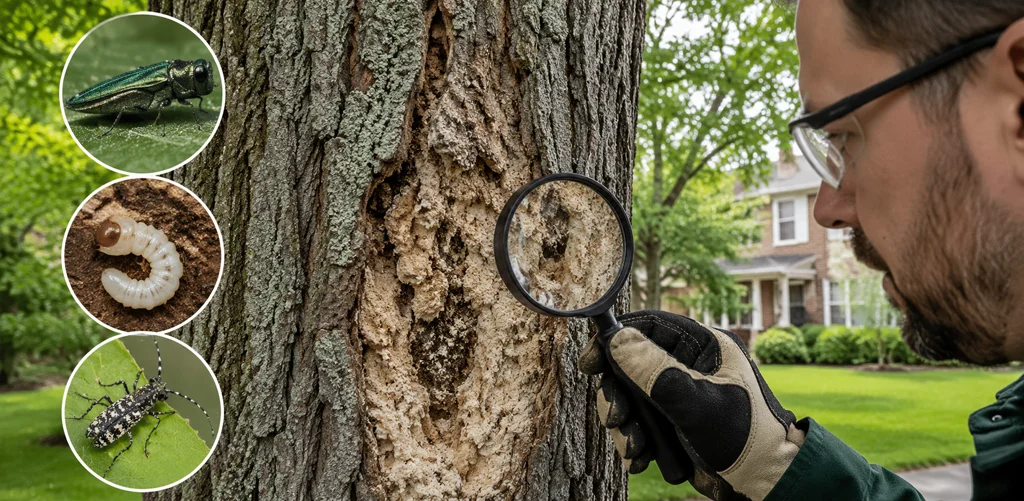
- Emerald Ash Borer (EAB) — A metallic green beetle whose larvae tunnel beneath ash bark, cutting off the tree’s nutrient flow. EAB has killed millions of ash trees in southern Ontario since its discovery in 2002.
- Spongy Moth (formerly LDD Moth) — Caterpillars can defoliate an entire oak or maple in weeks during outbreak years. Egg masses appear as tan, fuzzy patches on bark, fences, and outdoor furniture.
- Asian Long-Horned Beetle — A black-and-white beetle that attacks maples, birches, willows, and poplars. Active monitoring has helped contain it, but reports still emerge.
- Hemlock Woolly Adelgid — Tiny sap-sucking insects identified by white, cottony masses on the underside of hemlock needles.
- Spotted Lanternfly — Recently detected in southern Ontario, this planthopper feeds on over 100 host species and produces sticky honeydew that promotes mould growth.
For an in-depth field guide to identifying these and other invaders, this overview of tree pests to watch out for is a useful next step.
Diseases and Pathogens to Know
Insects aren’t the only problem. Fungal and bacterial diseases — often spread by pests themselves — can be just as devastating:
- Dutch elm disease continues to claim mature elms across the province.
- Beech bark disease is destroying American beech stands in southern Ontario.
- Butternut canker threatens the already endangered butternut tree.
- Oak wilt has been detected in border regions and is a growing concern.
How to Spot an Infestation Early
Most pest problems are easier and cheaper to treat when caught in the first season. Walk your property every few weeks during the growing season and look for:
- Thinning canopies or branches dying from the top down
- D-shaped exit holes (a telltale sign of emerald ash borer)
- Sawdust-like frass at the base of the trunk or in bark crevices
- Sticky, shiny residue on leaves or surfaces beneath the tree
- Visible egg masses, webbing, or clusters of caterpillars
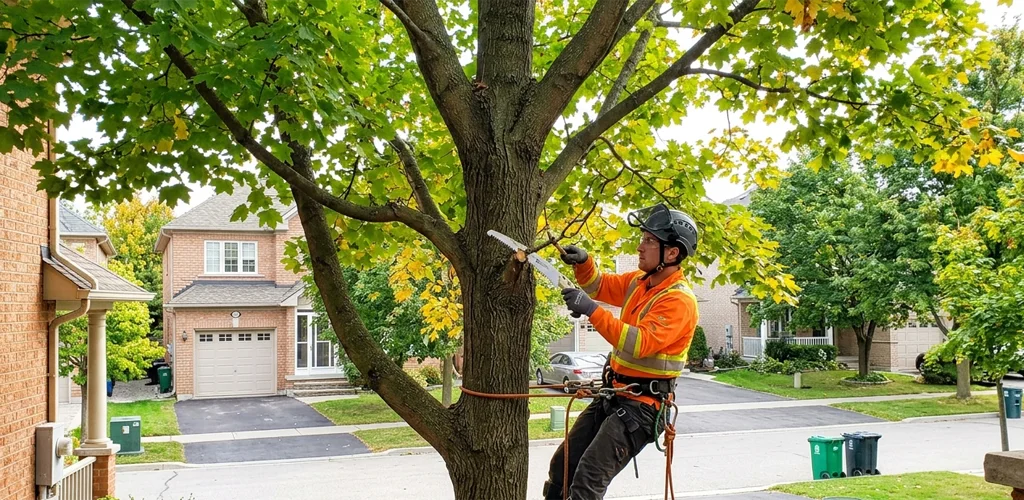
If your trees are tall or you can’t safely inspect the upper canopy, follow basic precautions outlined in this guide to tree care safety in the GTA before climbing or using power tools.
Treatment and Prevention Options
Once a pest is identified, treatment depends on the species, the size of the tree, and how advanced the infestation is. Common approaches include trunk-injected biological insecticides like TreeAzin (often used against EAB), egg-mass scraping for spongy moth, burlap banding to trap caterpillars, and selective pruning of infested limbs.
Chemical treatments are tightly regulated in Ontario, so it’s worth understanding what is legal and effective before buying anything off the shelf — this breakdown of tree pesticides in Ontario covers the current rules and product options.
What to Do If You Have a Dead or Dying Tree
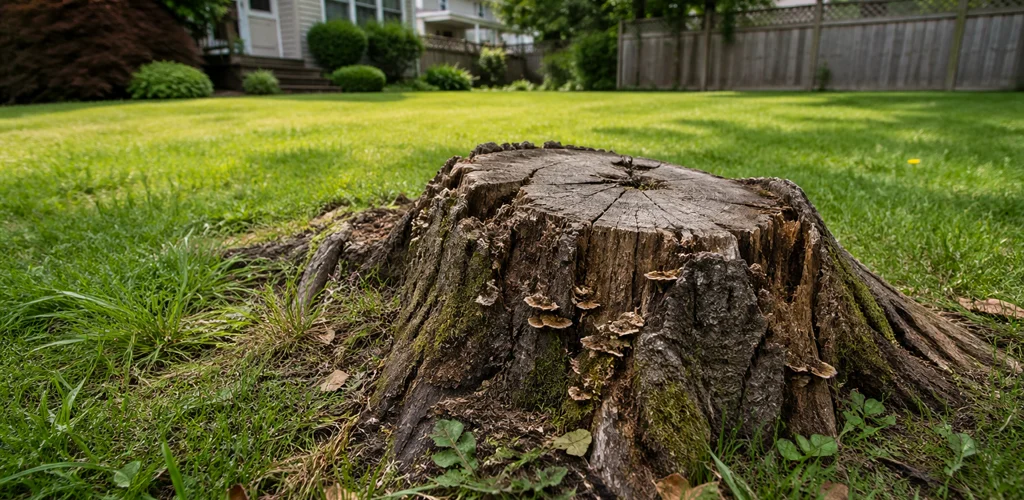
A tree killed by pests rarely stays standing safely for long. Brittle branches, hollow trunks, and weakened root systems become hazards in the next windstorm. Removal is often the only option, but the work doesn’t end there — leaving the stump behind can attract new infestations and invite rot. The hidden costs of leaving an old tree stump on your property explains why grinding it out is usually the smarter long-term choice.
Stop the Spread: Don’t Move Firewood
One of the simplest things any homeowner can do is leave firewood where it’s cut. Emerald ash borer, spongy moth eggs, and Dutch elm disease pathogens all travel easily inside untreated wood. The Canadian Food Inspection Agency has designated regulated zones across Ontario, and moving firewood out of those zones without a certificate is illegal.
* By using ontariolocalguide.ca, you acknowledge and accept the terms of our disclaimer.