Key Takeaways
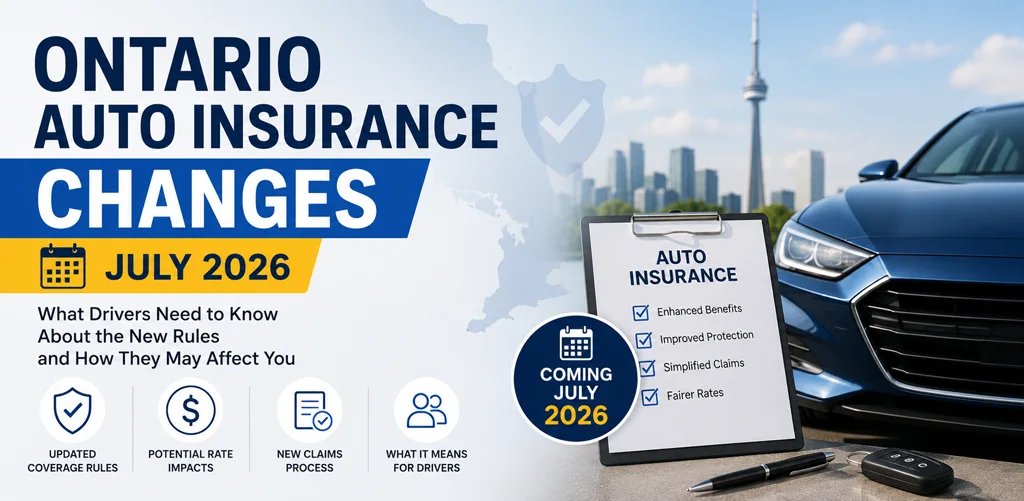
- Starting July 1, 2026, Ontario auto insurance shifts to an “à la carte” model where many previously mandatory accident benefits become optional add-ons.
- Only three accident benefits will remain mandatory in every policy: medical, rehabilitation, and attendant care. Everything else must be actively selected and paid for.
- Income replacement, caregiver, housekeeping, and non-earner benefits will all become optional — meaning a driver who doesn’t opt in could be left with no income stream from auto insurance after a serious injury.
- Existing policies renewing after July 1 keep their current benefits unless the driver opts out in writing. New policies purchased after that date default to mandatory minimums only.
- Opting out of optional benefits typically saves only a few dollars per month, while the out-of-pocket risk after a serious collision can run into tens of thousands of dollars.
- Self-employed workers, students, retirees, stay-at-home parents, and gig economy drivers face the highest risk of being underinsured under the new structure.
- Reviewing your coverage with an independent broker before your first post-July renewal is the single most important thing Ontario drivers can do this year.
Ontario is about to overhaul the way auto insurance works in a way most drivers have not yet absorbed. The change is not subtle. After more than a decade of operating under a relatively standardized package of accident benefits, the province is shifting on July 1, 2026 to a model where most of those benefits become optional — and the responsibility for choosing them lands squarely on you. Whether that change saves you money or leaves you dangerously exposed depends almost entirely on the decisions you make before your next renewal.
For drivers who treat their auto policy as a set-it-and-forget-it expense, this is the year that approach stops working.
What’s Actually Changing on July 1
Right now, every Ontario auto insurance policy includes a bundled set of Statutory Accident Benefits that kick in after a collision regardless of fault. That bundle covers a wide range of supports — income replacement if you cannot work, caregiver benefits if you cannot care for dependents, housekeeping benefits if you cannot manage your home, and non-earner benefits for students and others outside the workforce.
Under the new structure, only three categories remain mandatory in every policy: medical benefits, rehabilitation benefits, and attendant care benefits. Every other benefit migrates to the optional column. If you want income replacement after July 1, you have to actively choose it and pay for it. The same applies to caregiver, housekeeping, dependent care, and non-earner coverage.
For existing policies, the transition is gradual — your current benefits stay in place at renewal unless you specifically opt out in writing. For brand new policies purchased on or after July 1, the default is the bare minimum. That distinction matters: a driver shopping for a new car this summer will see policy quotes that look noticeably cheaper than what their neighbour pays — because those quotes do not include the protections their neighbour still has by default.
The Hidden Math of “Opting Out”
The most common selling point of the new system is choice — and on the surface, opting out of benefits you may already have through workplace coverage looks like an easy way to save money. The actual numbers tell a different story.
For most drivers, opting out of the full set of optional accident benefits produces savings in the range of a few dollars per month. That is real money over the course of a year, but it is a small fraction of a typical Ontario auto premium. What you give up in exchange is considerably more significant. Income replacement under the current system pays up to $400 per week after a collision that prevents you from working. Caregiver benefits help cover the cost of bringing in outside help when an injured parent cannot manage child care. Non-earner benefits provide support for students and others outside the traditional workforce.
If you opt out of those benefits and then sustain a serious injury, the only avenues left to you are your own workplace coverage (if you have it and if it applies), your own personal disability insurance (if you have it), or a tort claim against the at-fault driver — which can take years to resolve and offers no guaranteed outcome.
Who Is Most at Risk Under the New Rules
The drivers who stand to lose the most under the July 1 changes are the ones least likely to have alternative safety nets. Self-employed workers, gig economy drivers, freelancers, contract workers, students, retirees, stay-at-home parents, and low-income earners all fall into this category. None of these groups typically have employer-provided disability coverage that would replace the income replacement benefit they might opt out of.
If you fit into any of those categories and you opt out of income replacement to save $5 or $10 per month, you are effectively betting that you will never have a serious collision. The math of that bet works heavily against you over the course of a driving lifetime.
There is also a passenger consideration that is easy to miss. After July 1, optional accident benefits will only cover the named insured, their spouse, dependents, and listed drivers. If you are injured as a passenger in a friend’s car and that friend opted out of income replacement, you do not have access to those benefits through their policy. Your only recourse is whatever benefits exist on your own auto policy — if you have one.
What Ontario Drivers Should Do Before July 1
The single most useful action you can take this year is to schedule a coverage review with an independent insurance broker before your first post-July renewal. An independent broker — one who works with multiple carriers rather than a single company — can compare what your current policy includes, what would change at renewal under the new rules, and how the optional benefits stack against any workplace coverage you may already have.
A few specific items are worth bringing into that conversation:
- A clear picture of any disability, sick leave, or short-term and long-term coverage you have through your employer, and the gaps in that coverage.
- An honest assessment of how much you would owe out of pocket each month if you could not work for six to twelve months after a collision.
- Whether anyone in your household depends on you financially — and how their needs would be met if your income disappeared.
- A second opinion on the policy you are currently paying for, since shopping the market alone often produces meaningful savings without sacrificing protection.
This is exactly the kind of policy decision where having a knowledgeable advocate matters. If you are working with a service professional for this — or for any of the other major financial decisions that come up around vehicle ownership — the same principles in how to choose a reliable contractor in Ontario apply to selecting a broker: ask about their licensing, how many carriers they work with, and how they get paid.
It is also worth understanding how auto insurance fits into the broader cost of vehicle ownership in Ontario, which has been climbing on multiple fronts. The breakdown in the ultimate guide to navigating used car loans in Ontario covers the financing side of that picture, and your insurance choices interact directly with it — particularly if you are leasing or financing a vehicle that requires comprehensive coverage as a condition of the loan.
The Bigger Pattern for Ontario Drivers
The July 2026 reform sits inside a broader trend that Ontario drivers have been feeling for years: insurance is becoming more individualized, more variable, and more dependent on decisions you make rather than defaults you inherit. That cuts both ways. Drivers who pay attention and choose deliberately can build a policy that fits their actual life. Drivers who sign whatever shows up at renewal will end up either paying for coverage they do not need or — far more dangerously — losing coverage they assumed was still there.
The same principle applies to other major household expenses connected to home and vehicle ownership in Ontario right now. Premiums are climbing, structures are shifting, and the homeowners and drivers who come out ahead are the ones who treat these decisions as active rather than passive. The thinking behind why Ontario home insurance premiums keep rising and what to do about it applies almost directly to the auto side as well.
For more practical guides on navigating the financial and regulatory side of life in Ontario, the Ontario Local Guide blog covers the topics that matter most to households across the province.
* By using ontariolocalguide.ca, you acknowledge and accept the terms of our disclaimer.