
Key Takeaways
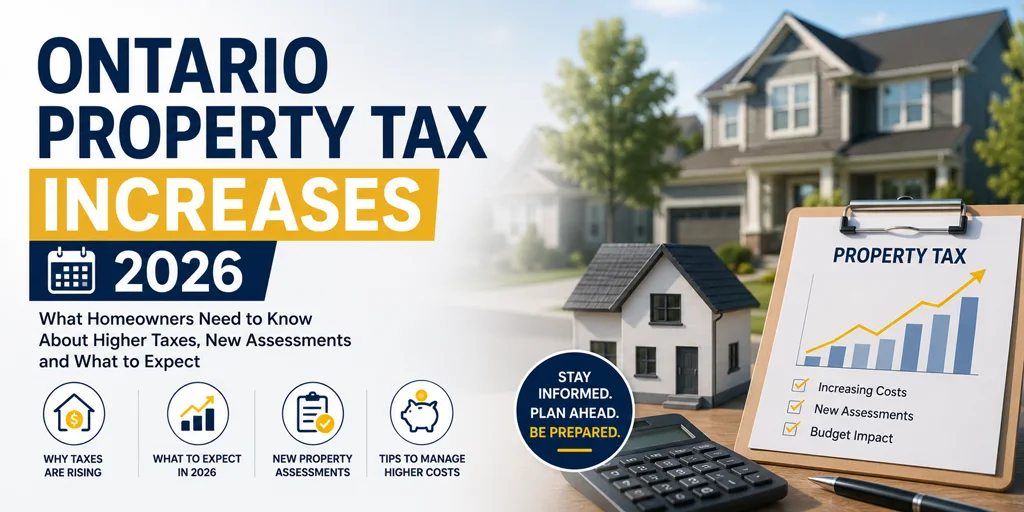
- Most Ontario municipalities approved residential property tax increases between 2.2% and 5.2% for 2026, with regional levies on top adding several hundred dollars to a typical bill.
- Toronto’s 2026 increase came in at a relatively modest 2.2% after back-to-back hikes of 9.5% in 2024 and 6.9% in 2025 — meaning many homeowners are now paying significantly more than they were just three years ago.
- Mississauga and Brampton homeowners face combined municipal and Peel Region increases that add roughly $200 or more per household, with regional services and policing driving most of the regional portion.
- Ontario property assessments remain frozen at January 1, 2016 values for the tenth straight year, creating uneven tax burdens between neighbourhoods that have appreciated at very different rates.
- A successful appeal of your MPAC assessment can lower your annual bill for years to come, but the window to file is narrow and most homeowners never check whether they qualify.
- Senior and low-income property tax deferral and relief programs exist in most major Ontario cities but remain dramatically underused, with eligible residents often unaware they apply.
- Vacant home taxes — now at 3% of assessed value in Toronto — apply to far more situations than most owners realize, including some primary residences that simply failed to file the annual declaration.
Property tax is the household expense that arrives once or twice a year, gets paid without much scrutiny, and quietly becomes one of the largest single bills most Ontario homeowners encounter. In 2026, it is also the expense that is increasing in ways that homeowners are starting to notice and resent. The frustration is justified — taxes are climbing faster than wages in most parts of the province — but the system that produces them is genuinely opaque, and most homeowners are paying without ever checking whether their bill is actually accurate.
That is a fixable problem. The trick is understanding what is driving the increases, where the leverage points actually are, and which programs and appeals are genuinely available to you.
What’s Driving 2026 Property Tax Increases Across Ontario
Municipal budgets across the province are facing a combination of rising service costs, infrastructure backlogs, and inflationary pressure on wages and contracts. The result is that nearly every Ontario city approved a residential property tax increase for 2026 — and in some cases, multiple stacked increases.
Toronto’s 2026 residential rate climbed by approximately 2.2%, which sounds modest until you stack it against the 9.5% increase in 2024 and the 6.9% increase in 2025. A homeowner who paid $5,000 in property tax in 2023 is now paying meaningfully more, and the City Building Fund levy has continued to add 1.5% annually on top of the base rate through 2026.
Mississauga approved a total property tax increase of approximately 5.2% for 2026, translating to roughly $377 more per year on a $700,000 assessment compared to the prior year. Peel Region added another 3.4% on top of that for regional services and policing, contributing approximately $213 in additional regional taxes for the average Mississauga and Brampton homeowner. Hamilton’s residential increase came in around 4.25%, and combined regional increases in Halton — including Milton — landed in the same range.
The pattern is consistent across the province: smaller cities with limited tax bases are seeing some of the highest percentage increases, even as the absolute dollar bills remain lower than what major urban centres pay. The two factors that matter for your bill are your municipality’s tax rate and your property’s assessed value — and that second factor has been frozen in place for years.
The Assessment Freeze That Most Ontarians Don’t Know About
Here is the part of the system that catches most homeowners off guard. Your property tax is calculated based on your home’s assessed value as determined by the Municipal Property Assessment Corporation (MPAC) — and that assessment is currently based on what your home was worth on January 1, 2016. The provincial reassessment that was supposed to happen in 2020 was delayed because of the pandemic, then delayed again, and has now been postponed multiple times. Heading into 2026, the Ford government once again deferred the reassessment cycle.
This produces strange outcomes. A condo downtown that has appreciated 40% since 2016 is being taxed on its 2016 value. A suburban detached home that has nearly doubled in value is also being taxed on its 2016 value. The relative burden between those two homeowners is wildly out of step with current market reality — and when MPAC eventually does update the assessment base, the shifts will be significant. For now, the frozen assessment is generally working in homeowners’ favour, but it is also masking how much the underlying system has drifted from market reality.
If your home was renovated, expanded, or substantially altered after 2016, your assessed value may have been adjusted upward — and that adjustment is worth verifying. Mistakes happen, and an inflated assessment quietly costs you money every year until it is corrected.
The Three Levers That Actually Lower Your Bill
Most homeowners assume property tax is a fixed expense they have no influence over. That is partly true and partly not. There are three meaningful levers worth understanding.
Appeal Your MPAC Assessment
If your assessed value is higher than it should be — either because of a clerical error, a comparable-home discrepancy, or a change in the property’s character — you have the right to file a Request for Reconsideration with MPAC. The process is free, and a successful appeal lowers your tax bill for every year going forward until the next reassessment. Comparable-home data is publicly available, and a quick check of similar properties on your street is often enough to spot whether your assessment is out of line.
Apply for Tax Relief or Deferral Programs
Most major Ontario municipalities offer property tax deferral programs for seniors and persons with disabilities, often with income thresholds that more residents qualify for than they realize. Toronto’s program defers tax increases for eligible seniors aged 50 and over receiving a pension if household income is below $60,000. Similar programs exist in Ottawa, Mississauga, Hamilton, and across the province with varying eligibility rules. These programs are dramatically underused — many eligible residents never apply because they assume the qualifications are stricter than they actually are.
Check Whether You Are at Risk of Vacant Home Tax
Toronto’s Vacant Home Tax now sits at 3% of assessed property value, and Ottawa and Hamilton have implemented similar programs. Critically, every Toronto residential property owner — including those whose home is their primary residence — must file an annual occupancy declaration, even when no tax would be payable. Failing to file results in the property being deemed vacant and assessed accordingly. The April 30 deadline catches a surprising number of owners off guard each year, and the cost of missing it is significant enough to make this one of the highest-return five-minute tasks an Ontario homeowner can complete.
What This Means for Renovation and Improvement Decisions
If you are planning a major renovation, the timing of when MPAC updates your assessment matters. Substantial improvements — additions, finished basements, accessory dwelling units — can trigger reassessment, and the value added to your home translates directly into higher property taxes for years to come. That does not mean avoiding the renovation, but it does mean factoring the ongoing tax cost into your project budget rather than just the up-front construction price.
The same logic applies to insurance and rebuild value. Homeowners who finish renovations without updating either their property tax expectations or their insurance coverage can end up exposed on both ends — paying premiums on outdated rebuild values while also missing the higher tax bill that follows reassessment. The thinking laid out in what to know before starting a renovation in Ontario covers the planning side of that picture, and it pairs naturally with the broader cost trajectory discussed in why Ontario home insurance keeps climbing.
The Bottom Line for Ontario Homeowners in 2026
Property tax is going to keep increasing in most Ontario municipalities for the foreseeable future. Service costs, infrastructure backlogs, and provincial downloading are all pushing in the same direction, and the political appetite for major tax cuts is limited. What changes is how well-positioned individual homeowners are within that environment.
The owners who come out best are the ones who treat their property tax bill as something worth checking, not something to pay reflexively. That means verifying the assessment, applying for any relief programs you qualify for, filing the vacant home declaration on time, and factoring property tax into every major decision you make about your home — from renovations to refinancing to whether the time has come to sell.
For more practical guides to managing the financial side of home ownership and local life in Ontario, the Ontario Local Guide blog covers the topics that matter most to households across the province.
* By using ontariolocalguide.ca, you acknowledge and accept the terms of our disclaimer.