
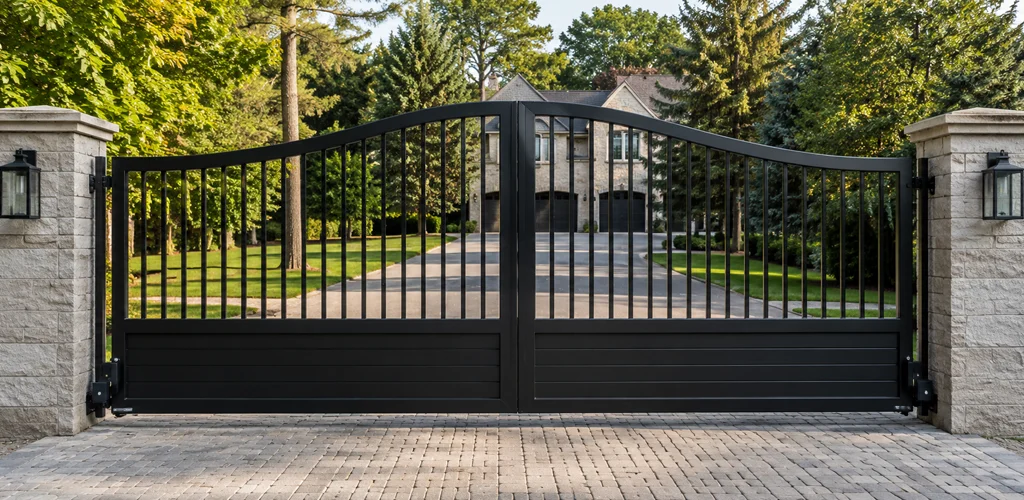
Adding a gate to your driveway is one of the most effective ways to boost privacy, security, and curb appeal on a residential or commercial property. But before any posts go into the ground, Ontario homeowners need to understand the permit and bylaw landscape that governs gate height, placement, and automation. Skipping this step can mean a stop-work order, a forced removal, or a costly redo.
This guide breaks down the permits, zoning rules, and electrical requirements that typically apply to driveway gate projects across the GTA and the rest of Ontario.
Key Takeaways
- Gate height and location relative to the property line determine whether a building permit is required.
- Municipal zoning bylaws control setbacks, sightlines, and how close a gate can sit to the road.
- Automated gates with electric openers almost always require an Electrical Safety Authority (ESA) notification, separate from any building permit.
- Sightline and intersection clearance rules exist specifically to prevent driveway gates from creating traffic hazards.
- Rules vary by municipality, so confirming directly with your local building department before installation is the safest first step.
When Does a Driveway Gate Need a Building Permit?
Permit thresholds differ from city to city, but height is usually the deciding factor. In many GTA municipalities, gates and fences under roughly 2.0 metres in side or rear yards can typically proceed without a building permit, while taller structures, or gates that form part of a larger fence system, often need one.
Front yard installations face stricter scrutiny almost everywhere in Ontario. Local bylaws frequently cap front yard fence and gate height at around 1.2 metres near the property line specifically to preserve sightlines for drivers and pedestrians. Before ordering materials, it is worth checking your municipality’s fence and gate bylaw directly, since “front yard” rules and “side or rear yard” rules are rarely identical.
Zoning Setbacks and Sightline Rules
Beyond height, zoning bylaws regulate exactly where a gate can sit on the lot. These provisions exist to keep driveways safe for vehicles and pedestrians, not just to control aesthetics.
Common zoning considerations include:
- Setback from the property line — gates often need to sit a minimum distance back from the road allowance so a stopped vehicle does not block the sidewalk.
- Corner lot visibility triangles — properties near intersections may face additional clearance requirements so drivers have an unobstructed view.
- Driveway width and turning radius — some municipalities specify minimum widths and turning radii for residential entrances, which can affect gate placement and swing direction.
- One driveway per lot — most residential zones only permit a single driveway entrance, which limits where a gate can realistically go.
If your project also involves widening the driveway or altering the curb cut, a separate driveway entrance permit from the municipality (or from the Ministry of Transportation, if the property fronts a provincial highway) may apply on top of any gate-specific approval. This is one of the areas where a renovation project can quietly expand in scope if the permit research isn’t done early.
Electrical Permits for Automated Gates
Most modern driveway gates use an electric opener, and that changes the permit picture significantly. Under the Ontario Electrical Safety Code, virtually all electrical work in the province requires a notification of work to the Electrical Safety Authority (ESA), and a building permit does not substitute for it.
A few points worth knowing:
- Only a Licensed Electrical Contractor can legally pull the ESA notification on a homeowner’s behalf.
- The notification should be filed before the work starts, or within 48 hours of starting.
- After installation, the ESA inspects the work and issues a Certificate of Inspection, which insurers may request later.
- Skipping this step can affect home insurance claims if the wiring is ever involved in a fire or damage event.
This is the permit most homeowners forget about, since it is easy to assume a building permit covers everything electrical as well.
Pool and Safety-Specific Requirements
If the driveway gate also encloses a pool area or connects to one, additional safety rules apply on top of the standard fence and gate bylaw. Self-closing and self-latching hardware is typically mandatory, with specific requirements for latch height and clearance from climbable elements like horizontal rails.
These requirements are enforced separately from general fence height rules, so a gate that satisfies the driveway bylaw will not automatically satisfy pool enclosure rules if the layouts overlap.
Working with the Right Installer
Because requirements shift from one municipality to the next, and because automation adds an electrical permit into the mix, the most reliable way to avoid a non-compliant installation is to work with an experienced local gate company. A specialist familiar with GTA municipal codes can typically flag permit requirements during the quote stage and coordinate the paperwork directly. Techno Gate GTA installs and services swing gates, sliding gates, and tilt gate and barrier systems across the Greater Toronto Area, including Newmarket, Aurora, and surrounding regions, and can help homeowners navigate both the gate design and the compliance side of the project.
Pairing the right installer with a reliable, properly vetted contractor for any related groundwork, such as driveway widening or electrical panel upgrades, helps keep the entire project on the right side of municipal rules from day one.
Final Thoughts
Driveway gates are a worthwhile investment for security and privacy, but Ontario’s permit landscape rewards homeowners who do their homework first. Confirming height limits, setback rules, and ESA requirements before signing a contract is the simplest way to avoid delays, fines, or a removal order down the road.
For more practical guides on home improvement projects and local regulations across Ontario, visit the Ontario Local Guide blog.
* By using ontariolocalguide.ca, you acknowledge and accept the terms of our disclaimer.