Key Takeaways
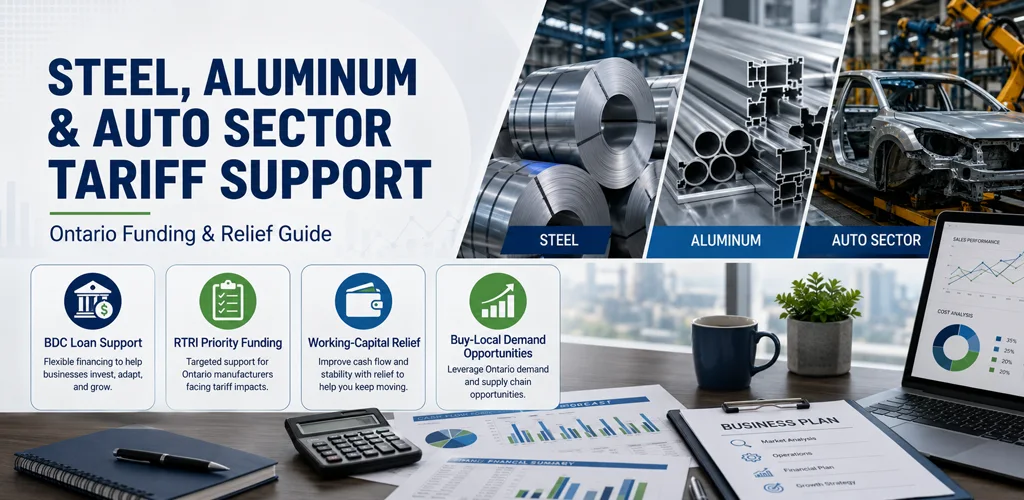
- Ontario’s steel, aluminum, and auto sectors are the most directly targeted by U.S. Section 232 tariffs, and now also face newer Section 338 measures.
- A new $1 billion federal BDC loan program launched in 2026 specifically for businesses that manufacture, export, or heavily use steel, aluminum, or copper.
- The Regional Tariff Response Initiative received an extra $500 million in 2026, with priority given to steel, automotive, and food security businesses.
- Ontario’s Buy Ontario Act now directs government fleet purchases toward made-in-Ontario vehicles, creating new domestic demand.
- These sectors can typically combine federal and provincial support, but each program has its own eligibility rules and application process.
Why These Sectors Are Under the Most Pressure
Ontario is home to Canada’s steel-making hub and a deeply U.S.-integrated auto industry, which makes it especially exposed to shifting American trade policy. The province’s steel supply chain alone supports roughly 16,500 workers, and auto suppliers frequently ship parts across the border multiple times before a vehicle is finished.
The scale of the disruption has been significant: Ontario’s manufacturing sector, which represents 11% of provincial GDP, has seen real GDP fall nearly 10% since 2023, with the steepest losses concentrated in autos, machinery, and metals.
Federal Support Built for Metals Producers
In May 2026, the federal government introduced a $1.5 billion support package specifically for the steel, aluminum, and copper sectors, following further U.S. tariff adjustments in April 2026. It includes:
- A new $1 billion BDC loan program for businesses that manufacture or export steel, aluminum, or copper products, or use these metals heavily in production
- An additional $500 million for the Regional Tariff Response Initiative (RTRI), on top of its earlier funding, to help firms in these sectors adapt and diversify
This is separate from — and can potentially be combined with — the RTRI program covered in our funding guide for southern Ontario businesses, which already gives sector priority to steel, automotive, and food security businesses.
Provincial Support Targeted at Steel, Aluminum and Auto
Ontario’s own response has centered on liquidity and demand-side measures:
- Protect Ontario Financing Program (POFP): Originally built specifically for Section 232-tariffed sectors (steel, aluminum, copper, autos) before its August 2026 expansion to cover Section 338 goods as well. Steel, aluminum, and auto businesses remain a core focus of this $1 billion loan program.
- Buy Ontario Act (Public Sector Procurement), 2025: Directs the province to prioritize made-in-Ontario vehicles for government fleet purchases, and Ontario/Canadian goods for infrastructure procurement — creating a demand-side boost for domestic auto manufacturers.
- Direct sector investments: Ontario has also made targeted moves like a joint $500 million investment (with $100 million from the province) to help a major Ontario steel producer manage tariff pressures and maintain jobs.
The Federal Auto Strategy
Beyond tariff-specific relief, a federal automotive strategy announced in February 2026 aims to incentivize made-in-Canada vehicle production, invest in Canadian AI and technology expertise for the sector, and position Canada as a leader in electric vehicle manufacturing. New federal funding tied to this strategy supports auto and parts companies, job training, and charging infrastructure — complementing Ontario’s own investments.
What This Means If You’re in One of These Sectors
If your business operates in steel, aluminum, copper, or automotive manufacturing (including supply-chain suppliers), you likely have access to more overlapping support than businesses in less-targeted industries. A practical approach:
- Start with POFP if you’re facing immediate working-capital strain — see our eligibility and application breakdown.
- Look at the new BDC steel/aluminum/copper program if your business manufactures, exports, or heavily uses these metals.
- Consider RTRI or the Ontario Together Trade Fund if you’re planning longer-term investments in reshoring, diversification, or technology adoption — our guide to the Ontario Together Trade Fund covers eligibility for that option in detail.
- Watch for procurement opportunities tied to the Buy Ontario Act if you produce vehicles or supply Ontario/Canadian infrastructure projects.
A Fast-Moving Situation
Tariff measures affecting these sectors have changed multiple times over the past year, and forecasts suggest continued pressure into 2026, with some estimates projecting an 8% GDP reduction in the manufacturing sector this year. Given how quickly eligibility and funding levels shift, businesses in steel, aluminum, or auto manufacturing should confirm current program terms directly with the administering agency before applying, and revisit available supports regularly rather than relying on older announcements.
* By using ontariolocalguide.ca, you acknowledge and accept the terms of our disclaimer.